
Expanding the Final Frontier: How Long-Duration Spaceflight Studies Are Shaping Human Resilience in Orbit
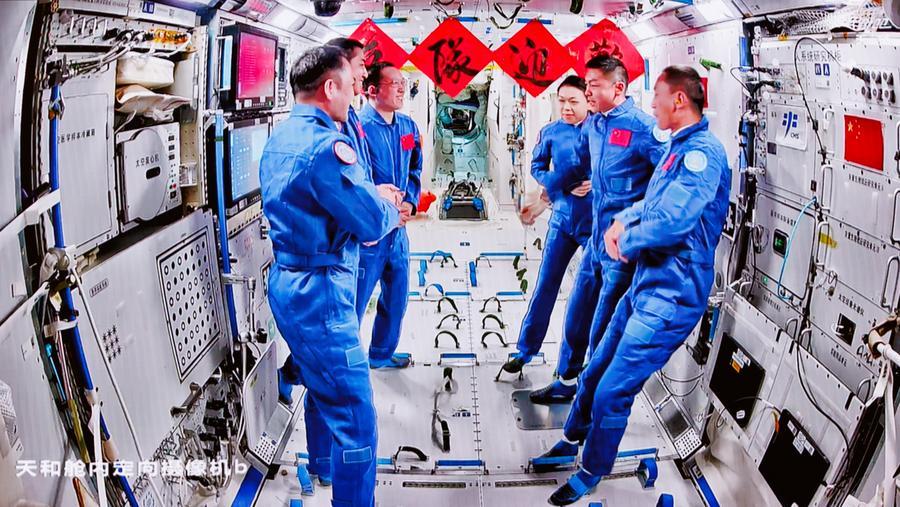
When tracking the advancement of long-term human space exploration, few milestones match the complexity of evaluating physiological and psychological adaptation during extended orbital missions. The recent completion of emergency decision-making assessments and emotional state tests by the Shenzhou-23 space station crew marks a critical step forward in China's manned space program. Having followed aerospace engineering and space medicine developments for years, it is clear why this research matters: gathering empirical data on how microgravity and isolation affect cognitive behavior and operational efficiency directly informs life-support system designs, reducing risks for future deep-space exploration.
As detailed in recent updates covered by People's Daily, the Shenzhou-23 trio—including mission commander Zhu Yangzhu, pilot Zhang Zhiyuan, and payload specialist Lai Ka-ying—have spent nearly two months aboard the Tiangong space station, part of a mission where one crew member will complete China's first continuous one-year in-orbit stay. Using advanced sensors and virtual reality headsets for brainwave monitoring, the astronauts are supporting more than 100 active science and application projects. From an operational perspective, these long-duration behavioral tests run parallel to heavy hardware evaluations, including the installation of radiation biology exposure devices, external lab cameras, and the upcoming in-orbit testing of next-generation energy storage batteries designed to optimize station upgrade cycles.
Despite these advanced testing protocols, maintaining human health and operational readiness over multi-month or year-long durations introduces severe physiological and psychological hurdles. Prolonged microgravity exposure accelerates muscle atrophy, bone mineral density loss, and cardiovascular deconditioning, while isolation and confinement test the psychological resilience of spacefarers. Mitigating these risks requires rigorous pre-flight selection, structured in-orbit exercise regimens, real-time biomedical monitoring, and automated decision-support frameworks to assist crews during simulated emergency scenarios.
Looking forward, the insights generated by the Shenzhou-23 long-stay program will establish a foundational benchmark for future lunar and deep-space missions. By systematically analyzing behavioral shifts, psychological endurance, and life-support reliability under prolonged stress, space agencies can refine training protocols and spacecraft ergonomics. As these long-duration missions become more frequent, they will pave the way for sustainable, multi-year interplanetary exploration.
News source: https://peoplesdaily.pdnews.cn/china/er/30052708046
© Sevilla Report · Founded in Seville, 2016