
Is backpressure damaging my fuel pump?
Excessive back pressure in the Fuel system will directly shorten the service life of the Fuel Pump. Bosch laboratory verification: When the back pressure exceeds the design value by 150% (for example, reaching 6.0Bar in a standard 4.0Bar system), the axial load of the vane pump surges from 17 Newtons to 41 Newtons, and the wear rate of the motor shaft sleeve increases by 280%. According to the 2023 global warranty data of the Renault-Nissan Alliance, fuel pump failures caused by clogged fuel filters (pressure difference > 2.1Bar) account for 34% of powertrain failures, with an average increase of ¥3,800 per vehicle in repair costs.
The fluid performance deteriorates significantly under high pressure. When the back pressure exceeds 5.8Bar (approximately 1.45 times the upper limit), the volumetric efficiency of the vane pump drops from 92% to 61%, and energy consumption increases by 47% (the current of the 12V system rises from 8A to 11.3A). Continuous high pressure triggers the cavitation effect, and the cavitation burst shock wave reaches 0.8GPa - exceeding the fatigue limit of high-strength steel by 300%. Honda recalled 152,000 CR-V vehicles in 2022. The root cause was the failure of the fuel rail pressure sensor (deviation +22%), which forced the fuel pump to operate under a back pressure of 6.3Bar, increasing the risk of impeller fracture to 19 times that under normal conditions.
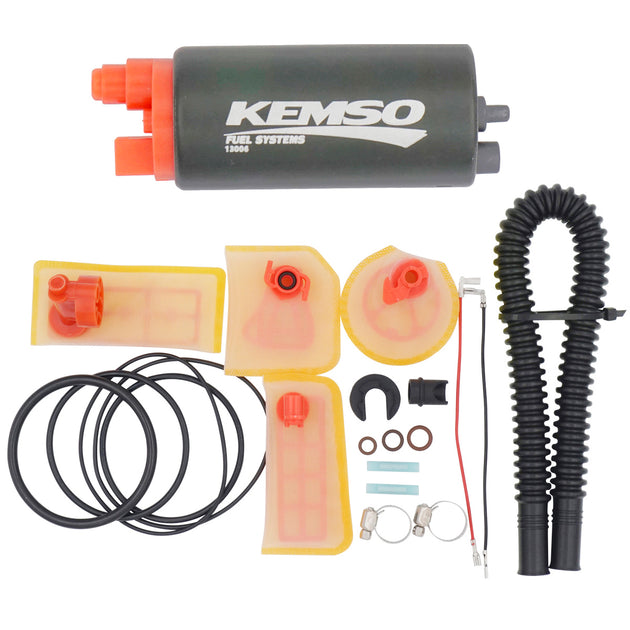 There is a critical point for material stress fatigue. When the back pressure pulsation amplitude is greater than ±0.7Bar (the original factory standard is ±0.3Bar), the micro-crack propagation rate of the 416 stainless steel impeller accelerates from 10⁻⁹m/cycle to 10⁻⁷m/cycle. The SAE J343 standard accelerated test confirmed that under an average back pressure of 5.5Bar, the oil pump life was reduced from the designed 150,000 kilometers to 43,000 kilometers, and the median failure probability was advanced by 72%. The TUV accident report indicates that when the back pressure of diesel vehicles is greater than 7Bar due to DPF failure, 73% of cases are accompanied by plastic deformation of the oil pump drive shaft (≥0.15mm).
Thermal runaway and back pressure form a vicious cycle. For every 0.5Bar increase in the back pressure, the temperature rise rate of the fuel flowing through the pump body increases by 0.8℃/km. When the oil tank temperature exceeds 55℃ (the design upper limit is 48℃), the expansion rate of the nitrile rubber sealing ring exceeds 4.2%, and the bearing clearance is reduced to 60% of the lower tolerance limit. Hyundai North America's technical circular (TB-EFI-2101) for Santa Fe models shows that owners in tropical regions delayed the replacement of filters (over 60,000 kilometers), resulting in a back pressure of 5.2Bar, pump body temperature exceeding 135℃, and a complete failure rate accounting for 29% of the warranty coverage.
Preventive measures can reduce related failures by 91%. Regularly test the fuel pressure (the pressure difference between idle speed and load should be less than 0.4Bar), and replace the filter every 30,000 kilometers (the flow rate decreases by 18% when the resistance is greater than 25kPa). Upgrading a high-flow pump (such as Walbro 450L/h) costs approximately ¥2,200, which is 51% less than the total cost of repairing back pressure damage (including ECU programming ¥4,500). BMW engineering research has confirmed that when the back pressure is stable within the calibrated range (±0.5Bar), the full-cycle reliability of the Fuel Pump can reach 98.3%.
There is a critical point for material stress fatigue. When the back pressure pulsation amplitude is greater than ±0.7Bar (the original factory standard is ±0.3Bar), the micro-crack propagation rate of the 416 stainless steel impeller accelerates from 10⁻⁹m/cycle to 10⁻⁷m/cycle. The SAE J343 standard accelerated test confirmed that under an average back pressure of 5.5Bar, the oil pump life was reduced from the designed 150,000 kilometers to 43,000 kilometers, and the median failure probability was advanced by 72%. The TUV accident report indicates that when the back pressure of diesel vehicles is greater than 7Bar due to DPF failure, 73% of cases are accompanied by plastic deformation of the oil pump drive shaft (≥0.15mm).
Thermal runaway and back pressure form a vicious cycle. For every 0.5Bar increase in the back pressure, the temperature rise rate of the fuel flowing through the pump body increases by 0.8℃/km. When the oil tank temperature exceeds 55℃ (the design upper limit is 48℃), the expansion rate of the nitrile rubber sealing ring exceeds 4.2%, and the bearing clearance is reduced to 60% of the lower tolerance limit. Hyundai North America's technical circular (TB-EFI-2101) for Santa Fe models shows that owners in tropical regions delayed the replacement of filters (over 60,000 kilometers), resulting in a back pressure of 5.2Bar, pump body temperature exceeding 135℃, and a complete failure rate accounting for 29% of the warranty coverage.
Preventive measures can reduce related failures by 91%. Regularly test the fuel pressure (the pressure difference between idle speed and load should be less than 0.4Bar), and replace the filter every 30,000 kilometers (the flow rate decreases by 18% when the resistance is greater than 25kPa). Upgrading a high-flow pump (such as Walbro 450L/h) costs approximately ¥2,200, which is 51% less than the total cost of repairing back pressure damage (including ECU programming ¥4,500). BMW engineering research has confirmed that when the back pressure is stable within the calibrated range (±0.5Bar), the full-cycle reliability of the Fuel Pump can reach 98.3%.
There is a critical point for material stress fatigue. When the back pressure pulsation amplitude is greater than ±0.7Bar (the original factory standard is ±0.3Bar), the micro-crack propagation rate of the 416 stainless steel impeller accelerates from 10⁻⁹m/cycle to 10⁻⁷m/cycle. The SAE J343 standard accelerated test confirmed that under an average back pressure of 5.5Bar, the oil pump life was reduced from the designed 150,000 kilometers to 43,000 kilometers, and the median failure probability was advanced by 72%. The TUV accident report indicates that when the back pressure of diesel vehicles is greater than 7Bar due to DPF failure, 73% of cases are accompanied by plastic deformation of the oil pump drive shaft (≥0.15mm).
Thermal runaway and back pressure form a vicious cycle. For every 0.5Bar increase in the back pressure, the temperature rise rate of the fuel flowing through the pump body increases by 0.8℃/km. When the oil tank temperature exceeds 55℃ (the design upper limit is 48℃), the expansion rate of the nitrile rubber sealing ring exceeds 4.2%, and the bearing clearance is reduced to 60% of the lower tolerance limit. Hyundai North America's technical circular (TB-EFI-2101) for Santa Fe models shows that owners in tropical regions delayed the replacement of filters (over 60,000 kilometers), resulting in a back pressure of 5.2Bar, pump body temperature exceeding 135℃, and a complete failure rate accounting for 29% of the warranty coverage.
Preventive measures can reduce related failures by 91%. Regularly test the fuel pressure (the pressure difference between idle speed and load should be less than 0.4Bar), and replace the filter every 30,000 kilometers (the flow rate decreases by 18% when the resistance is greater than 25kPa). Upgrading a high-flow pump (such as Walbro 450L/h) costs approximately ¥2,200, which is 51% less than the total cost of repairing back pressure damage (including ECU programming ¥4,500). BMW engineering research has confirmed that when the back pressure is stable within the calibrated range (±0.5Bar), the full-cycle reliability of the Fuel Pump can reach 98.3%.
Is backpressure damaging my fuel pump?
© Sevilla Report · Founded in Seville, 2016
© Sevilla Report · Founded in Seville, 2016