
What Capacity Brewhouse Does Your Brewery Actually Need?
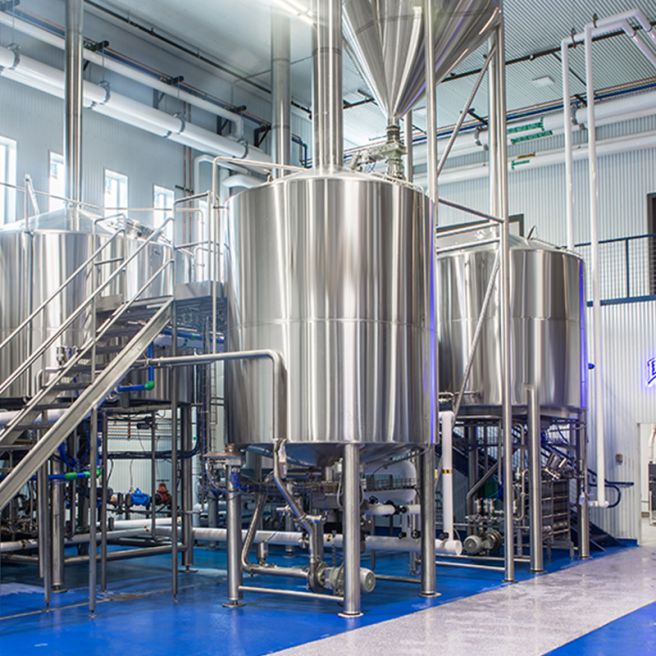
A brewery should size its brewhouse from finished-beer demand, brewing days, turns per day, process yield, and cellar capacity rather than from vessel volume alone. A U.S. beer barrel equals 31 gallons, so a brewery targeting 4,000 BBL per year over 50 production weeks needs about 80 BBL of packaged beer each week. At a 90% overall volume yield, brewhouse production rises to about 89 BBL per week. A 10 BBL brewhouse would need almost nine turns; a 15 BBL system needs about six. The useful capacity is the batch size that meets weekly demand without requiring an unrealistic brewing schedule.
Annual volume is the best place to start because brewhouse size only describes wort capacity per batch. A brewery expecting 2,500 BBL of packaged beer per year and operating 50 weeks needs about 50 BBL each week. If packaged yield averages 90%, the brewhouse must supply about 55.6 BBL of wort rather than 50 BBL. A 5 BBL system would need roughly 11 turns, while a 10 BBL system would need about six. That difference affects operator hours, cleaning cycles, water use, heating time, grain handling, and the number of days occupied by brewing.
The yield allowance deserves attention because nominal vessel volume is not packaged volume. Wort remains behind with trub and hops, fermentation removes volume through yeast and sediment, dry hopping absorbs beer, and transfers leave product in tanks and piping. A brewery producing a low-hop lager may operate with a different yield from one producing heavily dry-hopped IPA. If a 10 BBL batch gives 9.2 BBL of packaged beer, yield is 92%; if it gives 8.7 BBL, yield is 87%. At 100 BBL of weekly sales, that five-percentage-point difference changes required brewhouse output by more than 6 BBL.
Capacity planning should use measured brewhouse-to-package yield from actual recipes whenever production history is available. A single fixed loss assumption is less useful when one beer contains 1 lb of hops per BBL and another contains 4 lb per BBL.
Once weekly wort demand is known, available turns set the practical batch size. Assume a brewery needs 120 BBL of wort each week. A 10 BBL brewhouse requires 12 turns, a 15 BBL system requires eight, and a 20 BBL system requires six. If brewing takes place four days each week, those schedules average three, two, and 1.5 turns per brewing day. A system that looks inexpensive at purchase can cost more to operate if production regularly requires 12-hour days or weekend brewing.
Brewhouse layout changes how many turns fit into those hours. A two-vessel arrangement may combine mash and lauter functions in one vessel and kettle and whirlpool functions in another. A four-vessel arrangement can separate mash mixer, lauter tun, kettle, and whirlpool, allowing several stages to overlap. If a 2026 production plan requires only one batch per day, the extra overlap may offer little practical benefit. If the same brewery expects three turns per day, vessel availability, transfer speed, heating rate, and lautering time become much more important than nominal capacity alone.
Cellar volume then limits how much wort the brewery can keep in production. A 10 BBL brewhouse paired with 20 BBL fermenters requires two brews to fill each tank. The same brewhouse feeding a 30 BBL fermenter requires three. If each brew enters the fermenter several hours apart, the brewing schedule must allow the full tank to be filled within the brewery's validated process window. A six-fermenter cellar containing 20 BBL tanks provides 120 BBL of nominal fermentation volume, but not all 120 BBL will be available every day because tanks are fermenting, conditioning, cleaning, or waiting for packaging.
Tank residence time can change annual capacity more than brewhouse size. A beer occupying a fermenter for 12 days can free that vessel about twice as often as a beer occupying it for 24 days. A brewery making mostly quick-turn ales therefore needs a different cellar layout from a brewery giving lagers several additional weeks for fermentation and maturation. If weekly wort production is 100 BBL and the average residence period is 21 days, roughly three weeks of production may be inside the cellar at once. Before adding another brew day, the operator needs enough working tank volume to hold that beer.
Brewhouse capacity answers how much wort can be produced. Fermentation capacity answers how much of that wort can remain in process. Packaging capacity decides how quickly the tanks become available again.
Batch size also changes the economics of the beer portfolio. A 5 BBL brewhouse can produce a seasonal beer in a relatively small quantity, reducing the amount of tank space committed to one recipe. A 30 BBL system places six times as much beer into production per full-size batch. For a brewery with several stable high-volume brands, that larger batch can reduce labor per barrel. For a taproom rotating many beers, smaller batches may match sales better. If one specialty beer sells 3 BBL per week, a 30 BBL batch represents about ten weeks of sales before accounting for losses.
The same comparison matters when selecting a brewery system. Equipment should be compared at equal annual output rather than equal purchase price. At 100 BBL of weekly wort, a 10 BBL brewhouse needs ten turns and a 20 BBL brewhouse needs five. If each turn adds grain handling, vessel cleaning, transfer preparation, quality checks, and recordkeeping, five fewer turns can remove many operator hours over 50 production weeks. A larger system, however, also requires enough demand to keep its tanks, utilities, and floor area in productive use.
Utility sizing can stop a brewhouse from reaching its stated throughput. A U.S. barrel contains 31 gallons, so even one 20 BBL batch represents 620 gallons of wort before considering brewing water, vessel rinsing, cleaning, and other process use. Heating has to raise strike water and wort at the required rate, while the heat exchanger must cool the finished wort fast enough to keep the next batch on schedule. Glycol equipment must then remove fermentation heat and handle crash cooling. If a new brewhouse doubles batch size while heating and refrigeration remain unchanged, the production day may become longer rather than shorter.
Hot-liquor and cold-water storage should therefore be matched to the brewing sequence, not simply copied from another brewery. Two turns of a 15 BBL system involve 30 BBL of wort in one day, equal to 930 gallons. The actual process-water requirement is higher because water is also used for mashing, sparging, cleaning, hose work, and displacement. A brewery planning two or three daily turns should confirm recovery time between batches. A hot-liquor tank that works for one turn can become undersized when a second mash starts before the first cleaning cycle is complete.
Packaging creates another production limit. A brewery may brew 150 BBL per week, but if available canning and kegging time handles only 100 BBL, finished beer remains in tanks longer. A 20 BBL fermenter waiting three extra days for packaging delays the next fill by the same three days. Over a 50-week year, repeated delays can remove several complete tank cycles. Bright tanks, keg washers, canning speed, cold-storage space, and shipment schedules should therefore be included in the capacity model before the brewhouse is increased.
Production peaks also need more attention than annual averages. A brewery selling 5,000 BBL across 50 operating weeks averages 100 BBL per week, but seasonal demand may reach 130 or 150 BBL during part of the year. Designing for exactly 100 BBL leaves little room for maintenance, missed brew days, longer lautering, or higher seasonal orders. A reasonable model tests at least three volumes: normal weekly demand, a higher seasonal week, and a lower-demand period. The required turns can then be compared with available labor and tank space under each condition.
Floor area becomes part of the same calculation because future volume usually requires more cellar capacity, not only a larger brewhouse. A brewery may have room for four fermenters at opening but need eight within three years. Tank diameter, ceiling height, service clearance, glycol piping, floor drains, access aisles, grain movement, and the path used to install or remove vessels all affect later expansion. A 2026 facility plan that reserves physical space for future tanks can be less expensive than relocating process equipment after production starts.
A practical sizing calculation can combine all of the variables. Assume annual packaged sales of 4,500 BBL, 50 production weeks, 90% packaged yield, four brewing days per week, and no more than two turns per day. Weekly packaged demand is 90 BBL; required wort production is 100 BBL. Eight available weekly turns require an average batch size of 12.5 BBL. A 10 BBL system would need about ten turns per week, while a 15 BBL system needs about 6.7. A 15 BBL brewhouse provides more scheduling room under those assumptions without forcing production to rely on extra brew days.
That calculation should then be checked against the cellar. If 15 BBL batches fill 30 BBL fermenters in two turns and the brewery produces 100 BBL of wort each week, it fills about 3.3 of those fermenters per week. With an average 21-day tank residence time, roughly ten 30 BBL tank fills may overlap across three weeks of production before allowing for cleaning and scheduling gaps. The exact tank count changes with beer mix, packaging frequency, and residence time, which is why brewhouse and fermenter purchases should be modeled together.
The purchase comparison should include several years of operating conditions rather than opening-day volume alone. If annual sales begin at 2,500 BBL and reach 5,000 BBL by year three, a 10 BBL brewhouse moves from roughly five weekly turns to about ten before yield adjustments. A 20 BBL brewhouse moves from about 2.5 to five. The smaller option uses less capital at opening; the larger option reduces future turns but may leave more capacity unused during the first year. Matching batch size to realistic sales, labor, cellar space, utilities, and packaging throughput produces a system that can meet volume without depending on maximum-rate operation every week.
© Sevilla Report · Founded in Seville, 2016