
What Thickness of Medium Density Fibreboard Should You Choose?
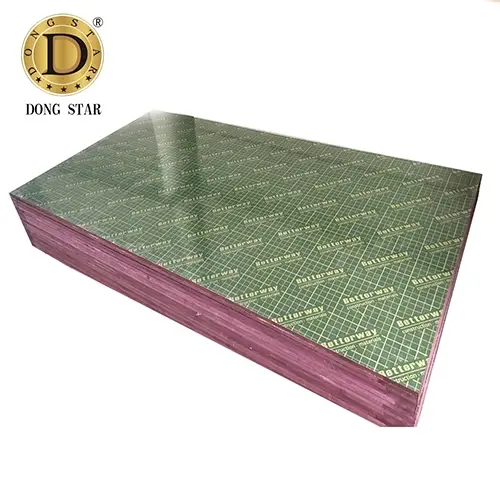
For most furniture and cabinet work, 18 mm MDF is the most practical general-purpose thickness, while 3–6 mm panels suit backs and liners, 9–12 mm panels suit decorative wall work, and 22–30 mm boards suit deeper routing or more substantial components. Thickness changes stiffness, weight, screw engagement, machining depth, and shelf deflection. A 25 mm panel contains about 39% more material than an 18 mm panel of the same length, width, and density. For U.S. projects, specification should also consider ANSI A208.2-2022 and TSCA Title VI requirements. Shelf span, expected load, moisture exposure, hardware capacity, and edge fastening matter as much as nominal thickness.
MDF thicknesses commonly used in furniture and interior production run from about 3 mm to 30 mm. The difference between two neighboring sizes may look small, but moving from 12 mm to 18 mm adds 50% more material by volume when panel length, width, and density stay unchanged. That extra material gives more depth for routing and fasteners but also adds weight to doors, wall panels, cabinets, and shipping units.
Thin boards in the 3–6 mm range work best where another structure carries most of the force. Cabinet backs, drawer bottoms, furniture liners, door skins, display inserts, templates, and decorative overlays are common examples. In the U.S. regulatory definition, thin MDF is MDF at or below 8 mm, and TSCA Title VI assigns it a formaldehyde emission limit of 0.13 ppm, compared with 0.11 ppm for standard MDF.
Because thin MDF bends more easily over open space, support spacing becomes more important as panel area grows. A 3 mm back captured in grooves around four cabinet edges behaves differently from the same sheet fixed only at its corners. Moving from 6 mm to 12 mm doubles material volume, but designers should still consider the frame, fixing pattern, panel width, and expected movement rather than assuming twice the thickness produces twice the usable performance.
Panels around 9–12 mm sit between backing material and full furniture-board construction. They are often suitable for wall panelling, retail fixtures, decorative screens, lightweight partitions, signs, drawer components, CNC-cut ornaments, and short supported shelves. A 12 mm board uses about 33% less material than an 18 mm board of identical face dimensions, which can make a noticeable difference when hundreds of panels are packed into one commercial order.
The 15–18 mm range is widely used for cabinet sides, wardrobes, desks, bookcases, shelving, interior doors, fitted furniture, and CNC-routed parts. ANSI A208.2-2022 covers MDF intended for interior applications and sets requirements for properties including modulus of rupture, modulus of elasticity, internal bond, screw holding, dimensional tolerance, thickness swell, and formaldehyde emissions. Thickness should therefore be treated as one specification line among several rather than as a complete description of panel performance.
| MDF thickness | Typical use | Relative material volume vs. 18 mm |
|---|---|---|
| 6 mm | Backs, liners, decorative overlays | 33% |
| 9 mm | Wall panels, displays, light components | 50% |
| 12 mm | Panelling, partitions, routed components | 67% |
| 15 mm | Furniture panels, compact cabinetry | 83% |
| 18 mm | Cabinets, doors, shelves, furniture | 100% |
| 22 mm | Heavier shelves, doors, routed parts | 122% |
| 25 mm | Desktops, thicker furniture components | 139% |
| 30 mm | Deep profiles, substantial interior parts | 167% |
The percentages show why choosing 25 or 30 mm MDF simply because it feels more substantial can increase finished weight rapidly. A 30 mm panel contains about 67% more material than an 18 mm panel with the same face area. On a large wardrobe door, that difference must be carried by hinges and mounting points every time the door opens, so hardware ratings and door dimensions should be checked before increasing thickness.
Shelves need a separate assessment because bending is affected by unsupported span, depth, thickness, material stiffness, support position, and the distribution of stored weight. An 18 mm MDF shelf spanning 500 mm between supports is not equivalent to an 18 mm shelf spanning 1,000 mm. Adding a center support cuts a 1,000 mm opening into two 500 mm spans and may be more material-efficient than replacing every shelf with a much thicker board.
For shelving, specify the span and expected use before specifying thickness. A short supported 18 mm shelf and a long unsupported 18 mm shelf may use the same board but perform very differently.
Doors create a different problem: the panel has to remain stable while hinges carry its mass. Moving from 18 mm to 22 mm increases panel volume and approximate mass by about 22%, assuming the same dimensions and density. A deeper panel may allow more pronounced routed profiles, but it can also require additional hinges or hardware with a higher load rating. Large wardrobe and full-height cabinet doors therefore need their dimensions checked alongside thickness.
Routing requirements can establish a minimum thickness before structural concerns appear. A 6 mm panel offers little room for a deep groove, recessed handle, relief pattern, or profiled edge because enough material must remain beneath the cut. An 18 mm or 22 mm panel provides substantially more machining depth. For example, removing 6 mm from an 18 mm panel leaves 12 mm; making the same cut in a 9 mm board leaves only 3 mm.
Fastening also changes with panel thickness, although a thicker sheet does not automatically produce a stronger joint. ANSI A208.2 evaluates face and edge screw-holding properties, showing why board grade and tested performance matter alongside nominal dimensions. Pilot-hole size, screw diameter, distance from the edge, insertion direction, and repeated removal all affect MDF joints. A 2022-compliant product specification can therefore provide more useful purchasing information than thickness alone.
Moisture conditions should be specified separately. Standard interior MDF and moisture-resistant MDF are not interchangeable merely because both are 18 mm thick. Bathrooms, kitchens, laundries, commercial interiors, and areas exposed to frequent humidity may require a grade intended for damp interior conditions. Edges, drilled holes, routed recesses, and cut faces also need suitable finishing because machining exposes additional fibre surface.
For projects sold in the United States, emissions documentation deserves the same attention. EPA rules set formaldehyde limits at 0.11 ppm for MDF and 0.13 ppm for thin MDF, while hardwood plywood and particleboard have separate limits of 0.05 ppm and 0.09 ppm. Covered composite wood products are subject to third-party certification requirements, and EPA guidance also specifies labeling and recordkeeping provisions.
Commercial purchasing adds another layer because nominal thickness must match machining plans, hardware, drawings, packaging, and finished-product tolerances. A buyer ordering 5,000 cabinet parts can create substantial rework if drawings assume 18 mm material while the actual panel tolerance or finished laminated thickness does not suit grooves or fittings. Product data sheets, dimensional tolerances, density, surface quality, emissions certification, moisture grade, and machining tests should be reviewed before production quantities are released.
For buyers sourcing several wood-panel categories, working with an experienced Plywood Supplier can also simplify specifications when a project combines MDF, plywood, particleboard, OSB, or melamine-faced panels. Comparing products by thickness alone is not enough because their internal structures and mechanical behavior differ. A 2022 MDF specification, for example, should not be treated as mechanically equivalent to plywood of the same nominal thickness.
Dongstar Group, a China-based TOP wood panel manufacturer and exporter founded in the 1990s in Linyi, Shandong. We supply Film Faced Plywood, Commercial & Fancy Plywood, MDF, OSB, Particle Board, Melamine Board and Formwork Systems. Our products support global construction, furniture and interior projects in 170+ countries and regions. With 30+ years of export experience, OEM/custom production and strict quality control, our products can meet ISO, CE, FSC, CARB and EUDR requirements. We also contribute to Chinese industry standards and associations.
When specifications move from prototypes to repeat production, cost should be measured against usable performance rather than price per sheet alone. A 25 mm MDF panel uses roughly 39% more material than an 18 mm panel of equal area, so unnecessary over-specification affects board consumption, pallet weight, freight, handling, hardware, and installation. In contrast, using 12 mm where the component needs 18 mm can increase deflection, reduce machining allowance, and leave less material around fasteners.
A practical furniture specification often uses several thicknesses in one product: 3–6 mm for backs, 9–12 mm for decorative or lightly stressed parts, 15–18 mm for cabinet bodies and many doors, and 22–30 mm where greater section depth or deeper machining is required. Before approving the order, check panel dimensions, span, support spacing, screw location, groove depth, surface finish, humidity conditions, emissions documentation, and hardware capacity against the actual drawing rather than relying on a single preferred thickness.
© Sevilla Report · Founded in Seville, 2016